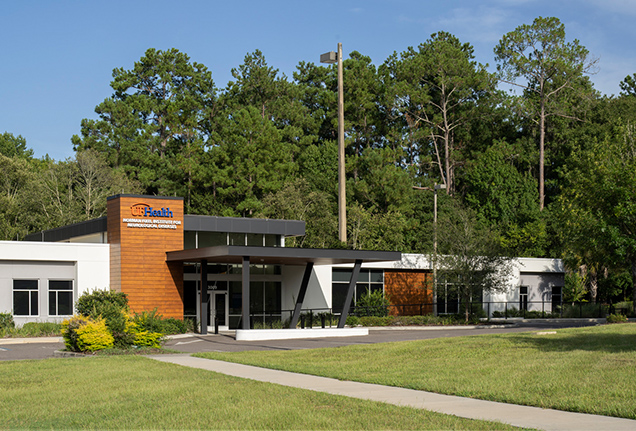
Neurological care asks a lot from patients and families. Strong neurological care facility design starts with understanding that people living with Parkinson’s disease, ALS, Alzheimer’s disease, movement disorders, traumatic brain injury, and other conditions of the brain and nervous system may rely on care that stretches across years. Symptoms change. Information changes. Treatment plans evolve. Families carry questions that don’t always have easy answers.
That makes the care environment matter.
Architecture isn’t the treatment, but the environment still affects the day. A confusing arrival, long walks between appointments, disconnected specialists, and sterile waiting areas all add friction. Better planning can help patients find their way, give families a place to settle, and help the care team stay focused on the person they’re there to serve.
In a conversation with Joe Walker on the Design for an Agile World podcast, Dr. Michael S. Okun, Director of the Norman Fixel Institute for Neurological Diseases at UF Health, described the founding philosophy behind the institute in simple terms: the patient is the sun, and the team orbits around them. That idea started when the program was just a small team in 2002 and stayed with the institute as it grew from a program, to a center, to an institute, and now toward a larger neurological campus.
Start With the Patient's Day
“The patient is the sun” sounds simple, but it changes the questions a design team has to ask. Where does the patient arrive? How far do they have to walk? Can a person with a movement disorder move through the building comfortably? Where does a spouse, adult child, or caregiver wait during a long visit? How does someone move from clinical care to imaging, infusion, rehabilitation, or research participation without feeling like they’re being passed through disconnected systems?
Those are practical questions, and they should be answered early. A neurological facility has to support the whole day, not only the appointment. Some patients may see several specialists in one visit. Some arrive with multiple family members. Some need rehab, imaging, clinical consultation, research participation, or follow-up care in the same trip. The building has to make those connections easier to understand and easier to navigate.
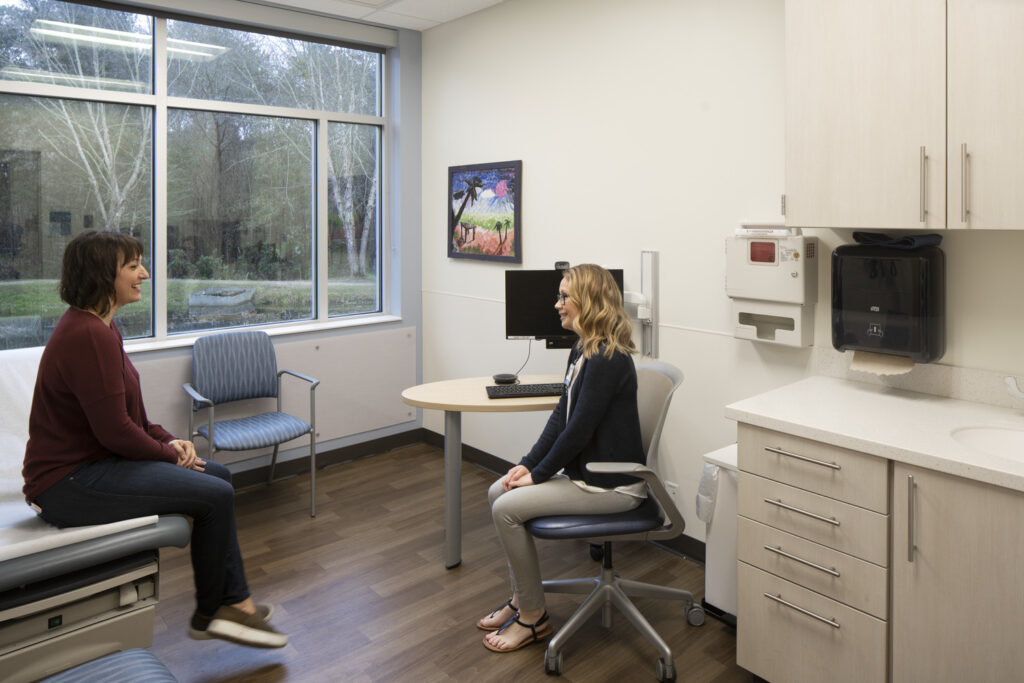
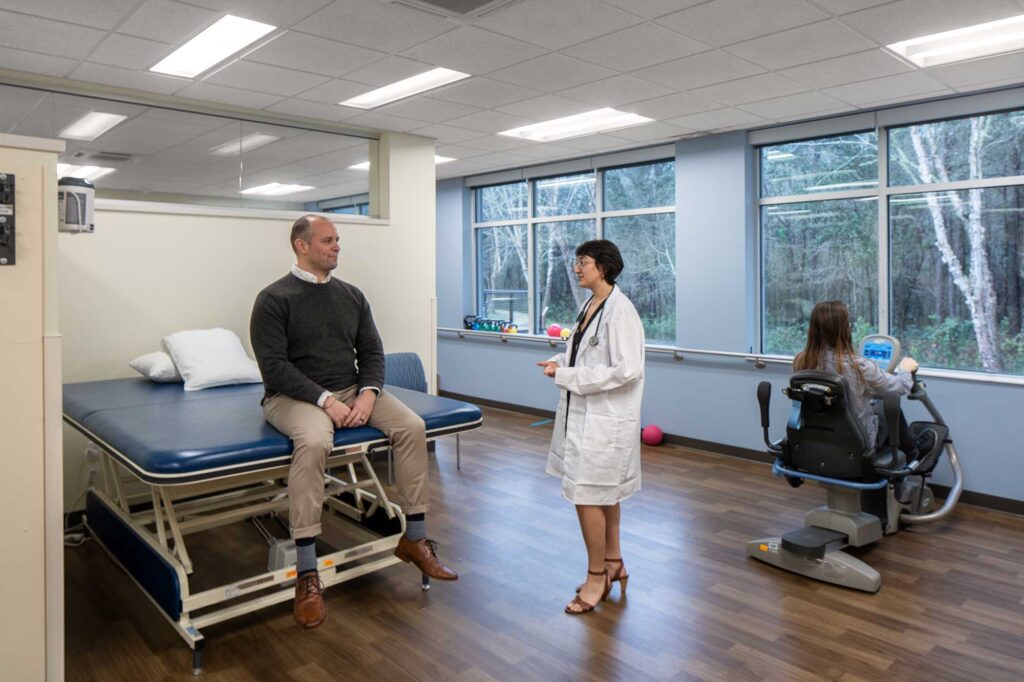
At Fixel, that thinking shaped the patient experience in visible ways. Dr. Okun described the peaceful path, outdoor waiting areas, access to nature, windows, open gathering spaces, patient art, rehabilitation areas, and the relationship between clinical, rehab, and research spaces. Each of those decisions connects back to the same idea: the person with disease has been considered before they ever walk through the door.
A window gives someone a view out during a hard appointment. A walking path gives a patient and caregiver a place to move, talk, or take a break. A family waiting area recognizes that neurological disease affects more than the person receiving treatment. These details may seem small on a floor plan, but they shape how the place feels when the day is long.

Reduce Uncertainty Wherever Possible
Dr. Okun talked about uncertainty as one of the hardest parts of neurological care. Patients and families often arrive with questions that don’t have easy answers. They may have searched online, heard different opinions, or waited a long time for clarity. A building can’t answer every clinical question, but it can give people a clearer path through the day.
That starts with basic things: arrival, parking, drop-off, wayfinding, walking distances, waiting areas, and how easily patients can move between services. If those pieces are confusing, the building adds stress before care even begins. If they’re carefully planned, the building begins to lower the burden on patients, families, and staff.
The early days of the Fixel program show why this matters. Dr. Okun described patients being sent across a large campus to reach neurology, neurosurgery, neuropsychology, physical therapy, occupational therapy, speech, swallowing, nutrition, and other services. He called it a kind of ping-pong match. For patients with neurological disease, that kind of movement can be exhausting.
A strong neurological facility brings the care model closer together. It helps physicians, therapists, researchers, advanced practice providers, data teams, and support staff stay connected around the patient. When the building supports that connection, patients and families don’t have to carry as much of the coordination burden themselves.

Plan for Care that Will Keep Changing
The Fixel Institute also shows how neurological care is changing. Dr. Okun talked about making every patient part of a larger learning system, with more than 19,000 patients followed prospectively through data collection. That information supports outcomes research, clinical trials, hypothesis-driven studies, and better understanding of care models over time. He also described the role of imaging, biomarker data, deep brain stimulation, rehabilitation, and health outcomes research in the institute’s work.
That has direct implications for design. A contemporary neurological facility may need to support clinical exams, rehabilitation, imaging, research enrollment, data collection, family consultation, education, and team collaboration in ways that feel connected to the patient. The patient shouldn’t feel like they’re being moved through separate systems. The building should help those systems work together quietly in the background.
Adaptability matters because neurological care will keep changing. Imaging, biomarkers, infusion therapies, rehabilitation models, clinical trials, data collection, and interdisciplinary care structures will continue to evolve. A building that’s too rigid can become a constraint on the work it was meant to support.
This is where early planning has real value. The design process should slow the team down before the project starts moving too quickly. It should test assumptions, make trade-offs visible, and help the owner decide what needs to be specific, what should remain flexible, and where change is most likely to happen.
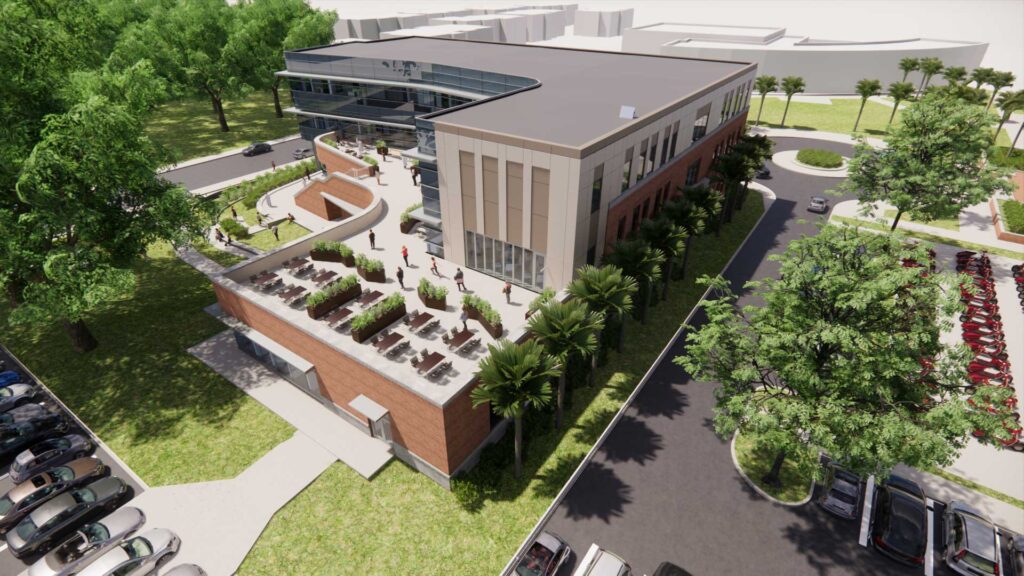
For neurological care environments, designing around the patient means planning the building as one connected care experience. It means understanding the patient journey before drawing conclusions. It means including the family experience in the planning. It means making interdisciplinary care easier to deliver and connecting research to clinical work in ways that feel natural to the person receiving care.
At its best, the building helps the team keep the person with disease at the center.
Learn more about the UF Health Fixel Institute for Neurological Diseases.
Frequently Asked Questions
What is neurological care facility design?
Neurological care facility design is the planning and design of healthcare environments for patients with conditions affecting the brain and nervous system, including Parkinson’s disease, ALS, Alzheimer’s disease, movement disorders, traumatic brain injury, and related conditions. These spaces should support patients, families, clinicians, researchers, and care teams across a long and often changing care journey.
What makes neurological care facilities different from other healthcare environments?
Neurological care facilities often need to support patients whose mobility, cognition, stamina, communication, and symptoms may change over time. Clear wayfinding, shorter travel distances, calm waiting areas, family support, interdisciplinary care, rehabilitation, research, and adaptability all become especially important.
Why is patient-centered design important in neurological care?
Patient-centered design helps reduce stress, confusion, and unnecessary burden for patients and families. In neurological care, the experience begins before the exam room. Arrival, parking, check-in, waiting, movement between services, family support, and departure all shape how supported a patient feels.
How can architecture support interdisciplinary neurological care?
Architecture can support interdisciplinary care by making it easier for physicians, therapists, researchers, data teams, and support staff to work around the patient. Shared collaboration areas, thoughtful adjacencies, clear circulation, and flexible clinical spaces can help the care team stay connected.
Why does flexibility matter in neurological care facility design?
Neurological care continues to evolve as research, diagnostics, treatment models, rehabilitation, imaging, biomarkers, and data tools change. Flexible planning helps a facility support today’s care model while leaving room for future clinical, research, and operational needs.

No comments.