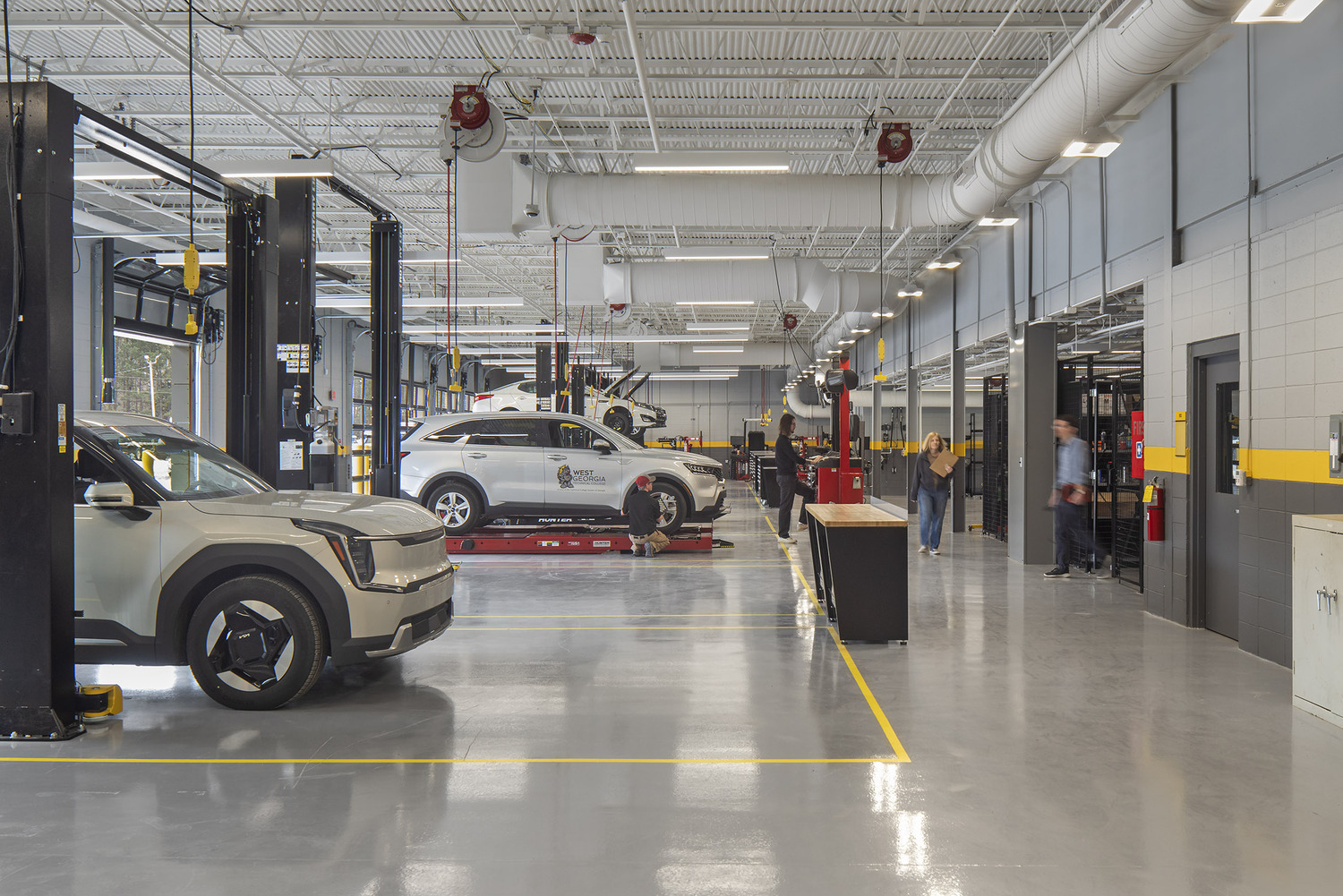
Automotive lab design for a college or technical education program is not the same as planning a commercial repair shop. When it's treated that way, students crowd around vehicles, instructors lose sightlines, and demonstrations become harder to manage. The space may look right on paper, but day to day it can work against the way people teach and learn.
At first glance, the two spaces can look similar. Both have lifts, service bays, vehicles, exhaust systems, diagnostic equipment, and tools. But they’re built around different priorities. A commercial shop has to move work efficiently. A teaching lab has to help students become capable, confident technicians. That difference affects almost every planning decision.
In a commercial shop, the person working on the vehicle usually knows what they’re doing and can work independently. The layout helps that technician finish the job and move on to the next one. In a college lab, the people around the vehicle are still learning. They need room to watch, ask questions, try the work, and sometimes get it wrong safely. The instructor needs to see what’s happening across the room, step in when needed, and move easily between a group demonstration and one-on-one coaching.
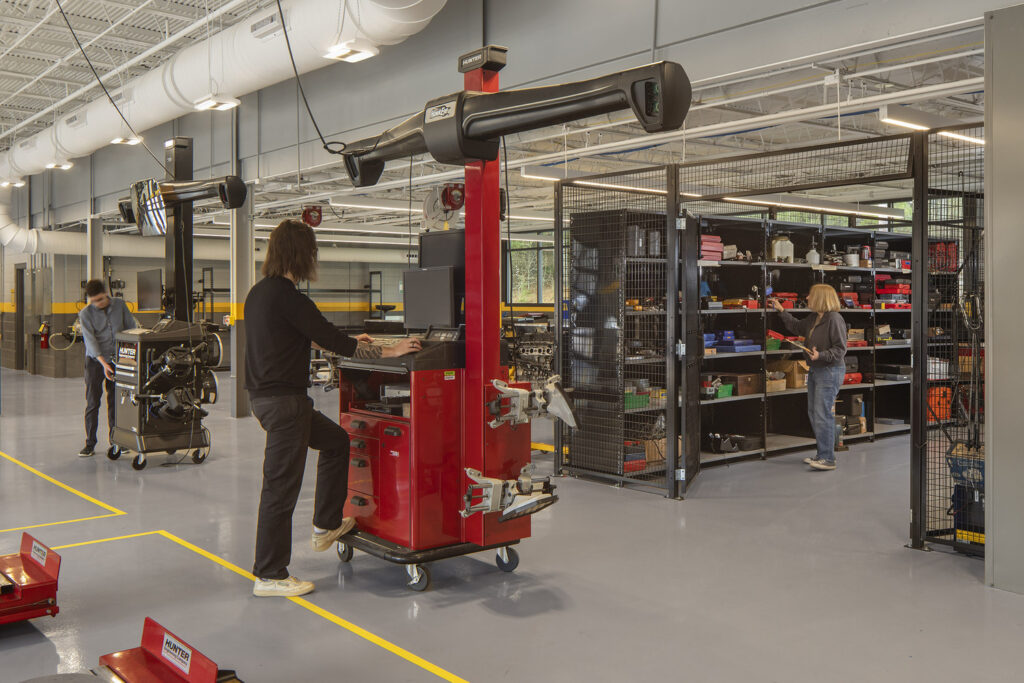
Give the Service Bay Enough Room to Teach
A good automotive lab starts by recognizing that the service bay also functions as a classroom.
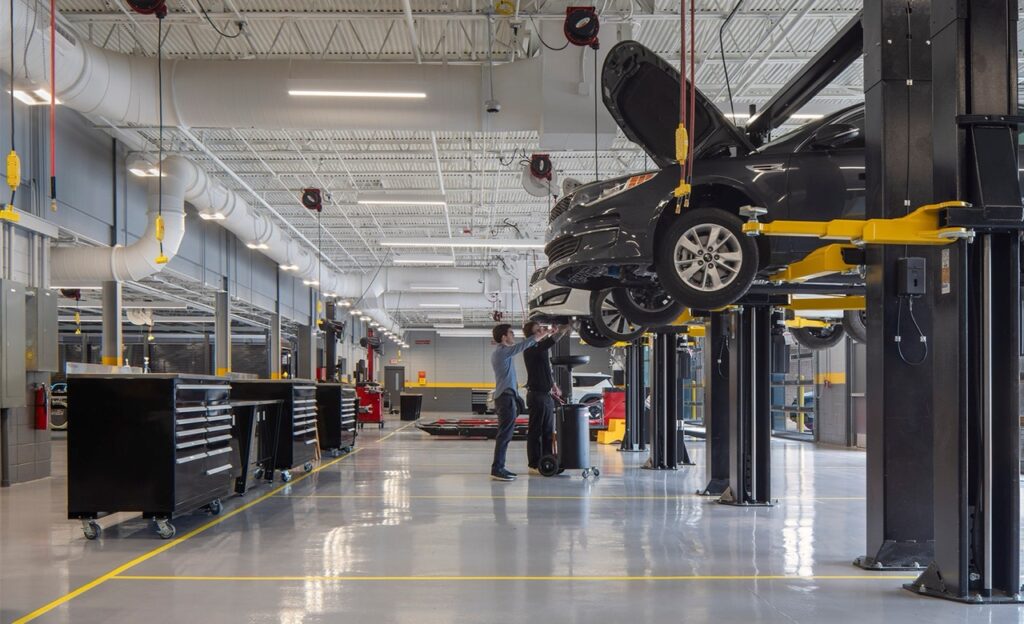
That means the bay needs more space than a typical production model suggests. A vehicle may have several students gathered around it, with some working and others observing. An instructor may need to pause the activity and demonstrate a procedure. Students may need to move around the vehicle while tools, carts, lifts, and equipment are already in use.
In that setting, extra space is working space. It helps people move safely. It gives students a better view. It reduces congestion during demonstrations. It also gives the program more flexibility as vehicle types, class sizes, and teaching methods change.
Make Movement Easy to Understand
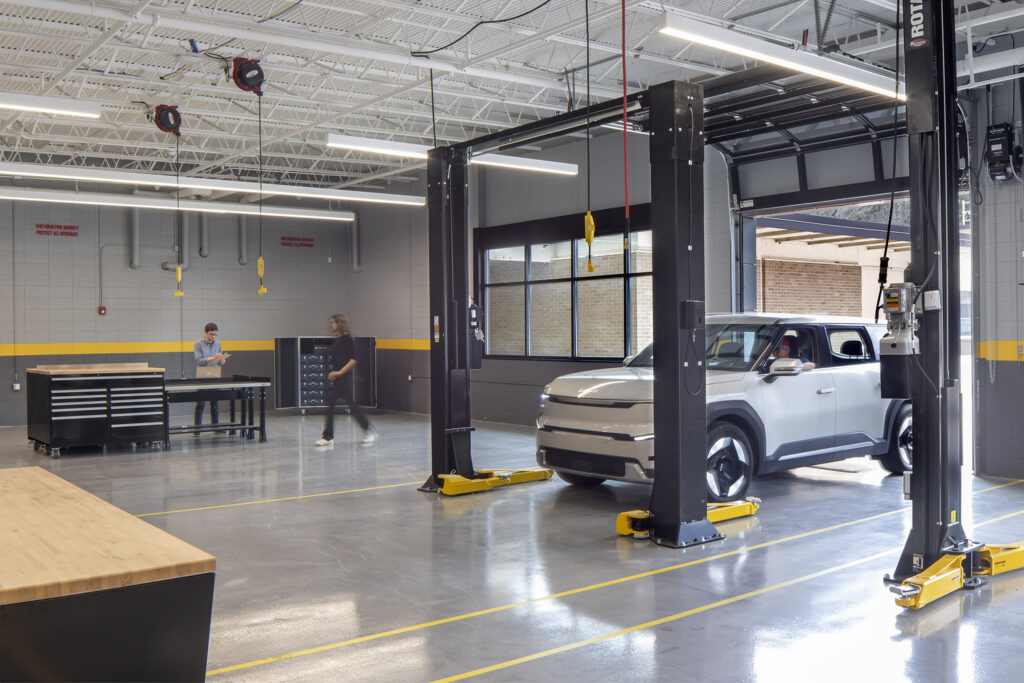
Automotive labs are active spaces. Students should know where to walk, where vehicles move, where demonstrations happen, and where tools and shared equipment belong. When those patterns aren’t clear, instructors spend more time managing the room and less time teaching.
Clear circulation lowers risk, but it also makes the lab easier to use. Students can focus on the work in front of them instead of figuring out where they’re supposed to stand. Instructors can keep the class moving without constantly correcting movement around the room.
Visibility matters for the same reason. Instructors need to monitor students working in different bays, equipment in use, vehicle movement, and safety procedures. If the layout blocks views or isolates support spaces, the instructor has to work harder to keep the class on track.
Bay orientation, column locations, glazing, instructor stations, and demonstration areas all shape how well the lab supports teaching. A glazed office or support room can give faculty a place to work while staying visually connected to the lab. A demonstration area can help the class gather quickly before returning to hands-on work. Clear sightlines help instructors catch problems early and keep students engaged.
Plan for the Way Programs Change
Students need to work with professional equipment, understand shop expectations, practice safety procedures, and build confidence in a setting that reflects the industry they’re entering. A college lab also has to slow the work down enough for learning to happen.
That is where a copied shop layout can fall short. The commercial model assumes people already know the work. The educational model has to support people while they’re learning it.
For colleges, this is also a long-term investment question. Automotive programs have to adapt as technology changes. A lab that’s too tightly planned around one workflow, one vehicle type, or one teaching method may become difficult to use as the program evolves. A lab planned around people, with enough space, visibility, and flexibility, is more likely to keep serving the institution over time.
The best starting question is simple: how will students and instructors use this space?
That question changes how large the bays need to be. It changes where people walk. It changes how instructors supervise the room. It changes where tools, equipment, storage, and demonstration areas should go.
In a higher education setting, an automotive lab is where students learn how to think, work, troubleshoot, and build the habits they’ll carry into the field. The building should support that from the beginning.
Read the second article in this series: Designing Automotive Labs around How Instructors Teach
No comments.