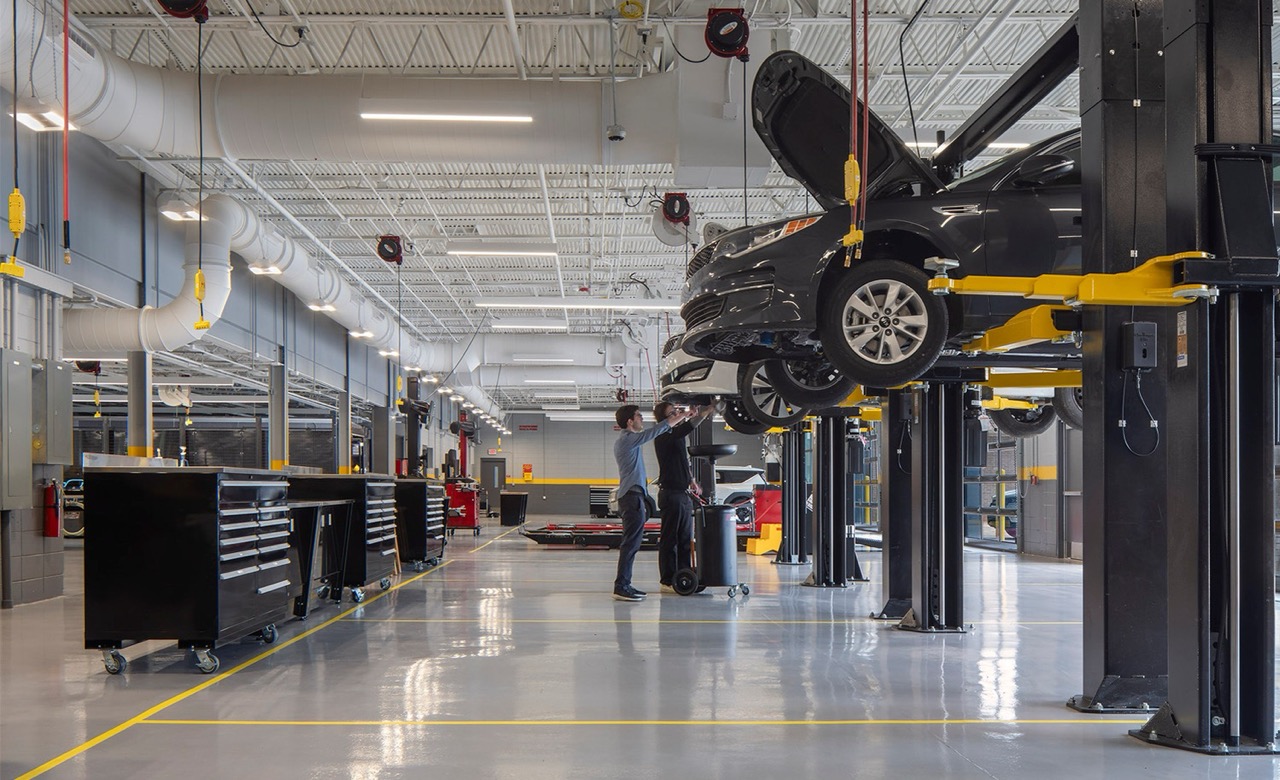
Students learn safety from the room, too. Automotive education lab safety begins with a space that makes safe behavior visible, understandable, and easier to repeat. Clearly identified controls, accessible shutoffs, and intuitive equipment placement help students build good habits through daily use.
They learn from what is visible, easy to reach, clearly marked, and made routine by the space. Safety cannot live only in the syllabus or the first week of instruction. Students are building habits every time they enter the lab. That makes the building part of the teaching system.
A well-planned lab helps students recognize risk and understand how to respond. It gives instructors better control when something needs to stop and makes safe behavior easier to repeat until it becomes normal. That matters because students are still learning how to work around vehicles, tools, lifts, utilities, and equipment. They may know the rule but not yet have the instinct. The room should help close that gap.
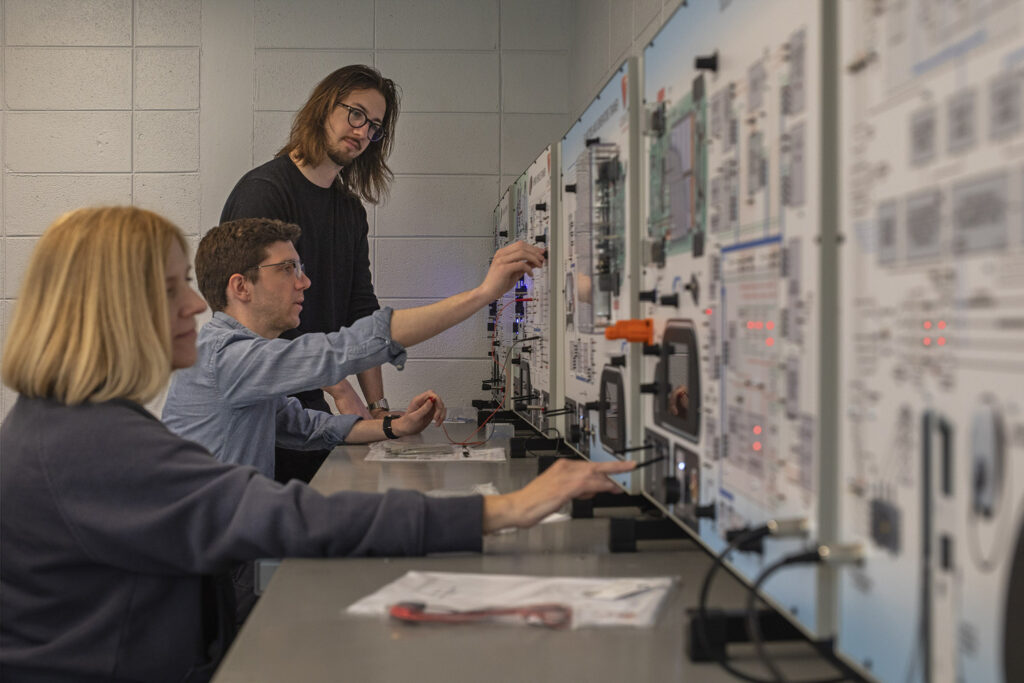
Make Safety Easy to See and Use
Emergency disconnects, compressed air shutoffs, electrical controls, eyewash stations, fire extinguishers, and other safety features should be clearly located and easy to understand. If a student or instructor has to search for the right control during a problem, the room has already made the situation harder.
Visibility matters during normal teaching, too. When students see safety systems every day, those systems become part of how they understand the workspace. They learn that safe work has a physical pattern. They know where to look, what to check, and how the room is organized around protection.
That kind of planning also helps instructors. A clearly organized lab gives faculty more confidence that students can follow procedures. It reduces the amount of repeated explanation needed to orient students to the space. It also supports visiting instructors, substitute faculty, industry partners, and maintenance staff who may not use the room every day.
Safety is easier to teach when the room makes it visible.
This image is copyrighted and registered with the U.S. Copyright Office in the Library of Congress. Unauthorized use prohibited. All rights reserved.
Design So Students Can Hear and Understand
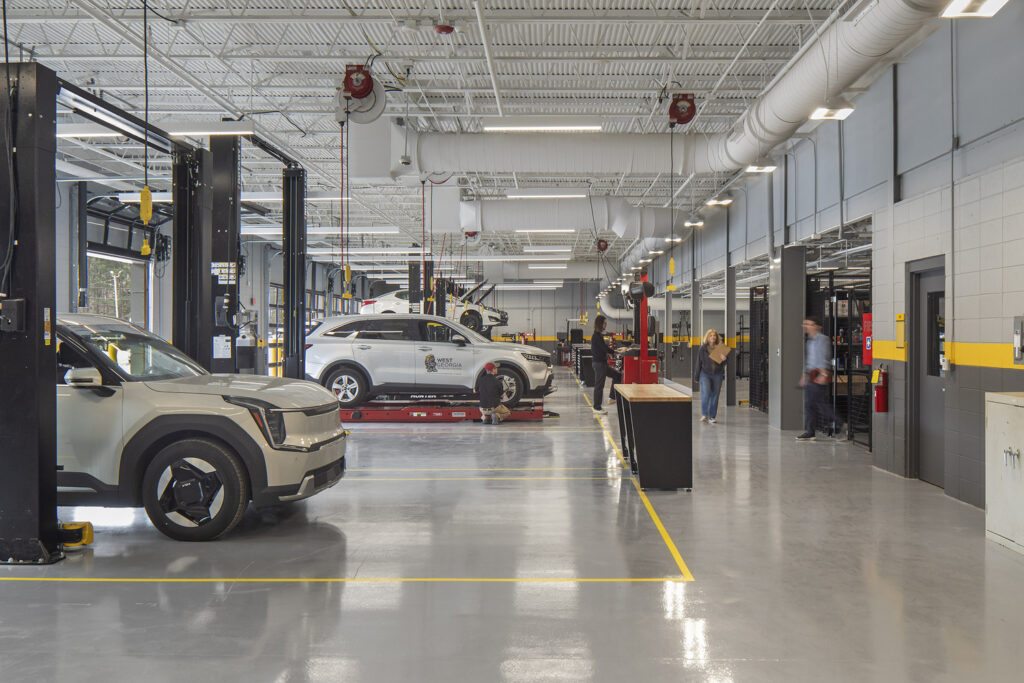
Automotive labs need ways to stop, isolate, or reset parts of the room quickly. Zoned shutoffs can help. If an instructor needs to isolate one bay, one utility zone, or one piece of equipment, the system should support that without disrupting the entire lab. That kind of control matters during demonstrations, troubleshooting, and emergencies.
It also matters for teaching.
An instructor may want to show students what happens when a system is de-energized. They may need to pause work in one zone while another group continues. They may need to respond to a student error without turning a manageable moment into a full-room disruption. The building should help the instructor manage those moments calmly. That means controls need to be located where instructors can use them. Labels need to be clear. Zones need to make sense. The logic of the room should match the way the class operates.
When safety controls are difficult to find or poorly organized, instructors have to compensate. When they’re built into the teaching flow, safety becomes part of the daily rhythm of the lab.
No comments.