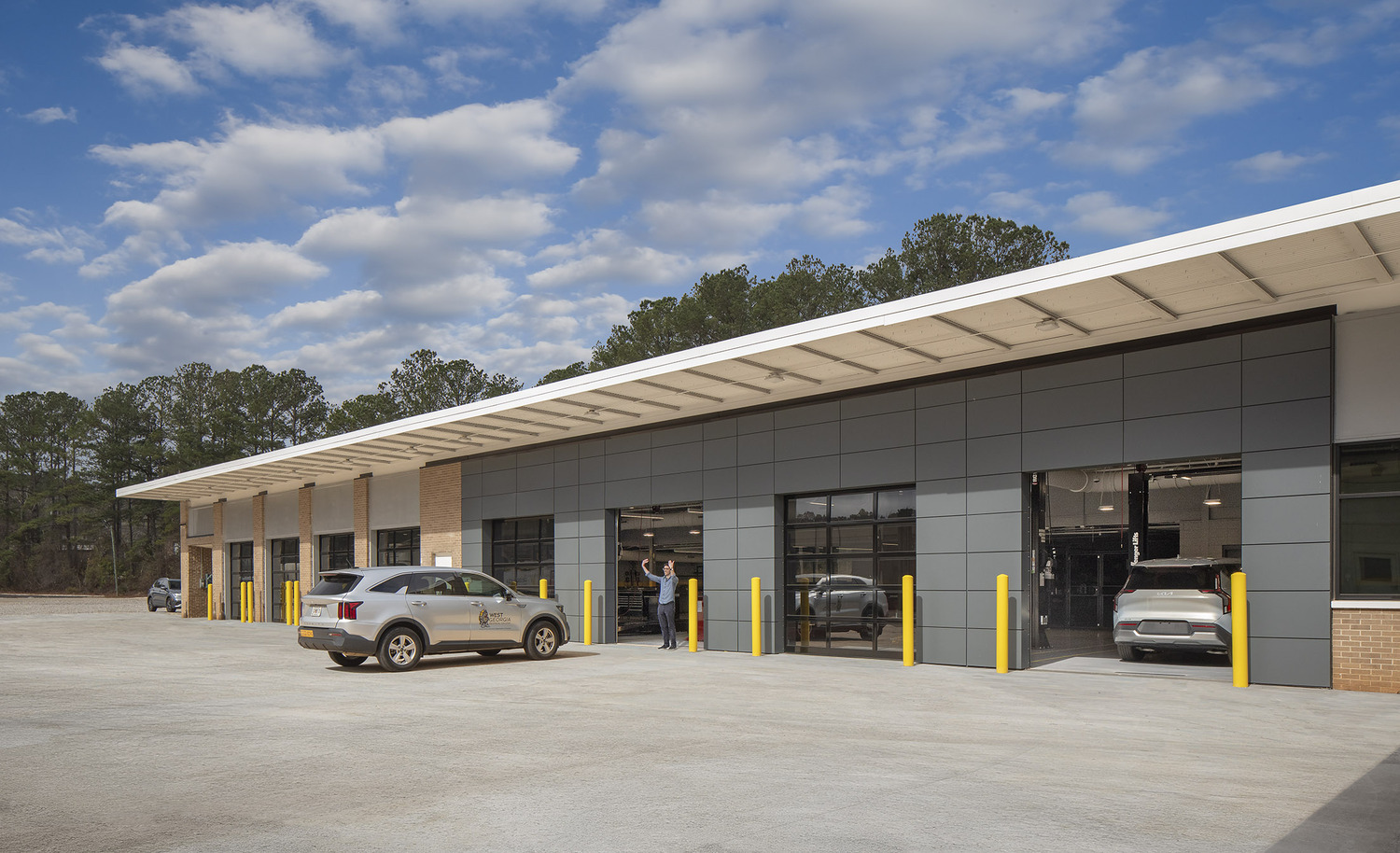
Automotive lab design should begin with the way instructors actually teach. Instructors can’t teach well in a room that fights them.
That becomes clear fast in an automotive lab. A student misses a step because they couldn’t see the demonstration. Another group keeps working while the instructor is trying to reset the class. A safety direction gets lost under the sound of tools, exhaust, and ventilation. The instructor ends up managing the room before they can teach the work.
For a college automotive program, that daily friction matters. It affects how confidently students learn, how safely they practice, and how much energy instructors spend keeping the class organized.
A good lab lowers that burden. It gives instructors places to gather students, enough visibility to stay connected to the room, and enough acoustic control for people to hear what matters. Those decisions may seem like layout details during design. Once classes begin, they shape the teaching day.
Teaching Happens in Motion
Automotive instruction rarely stays in one mode for long.
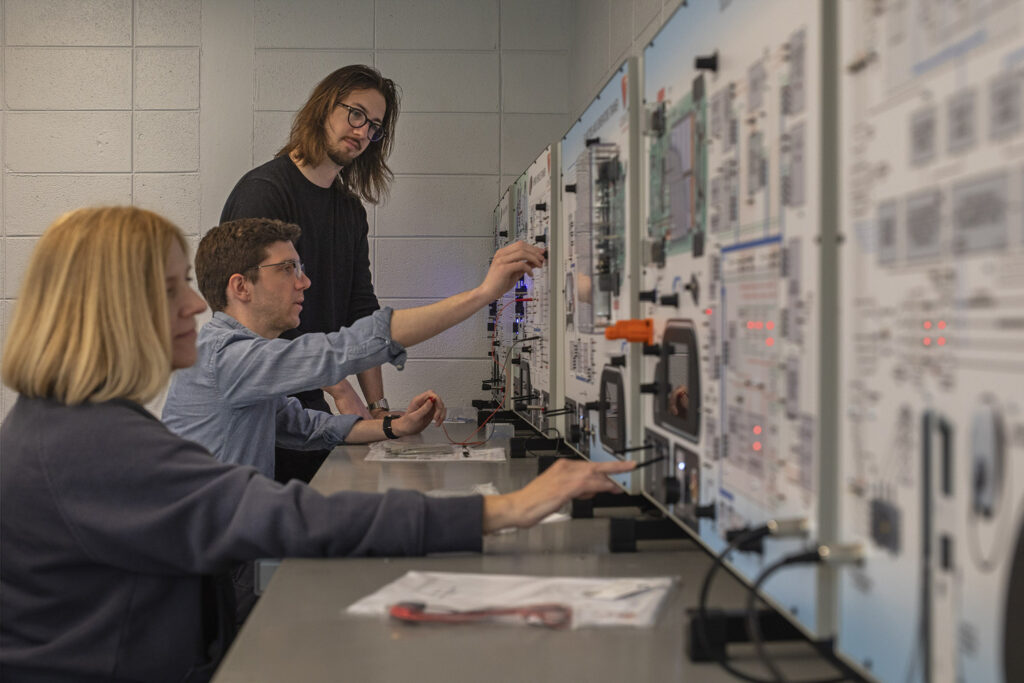
A class may start with a short explanation, move to a demonstration at a vehicle, break into small groups, pause for correction, then come back together when the instructor sees the same mistake happening in several bays. That rhythm is normal. The lab should support it.
When the space doesn’t support that movement, instruction slows down. Students cluster wherever they can. Some can’t see. Some can’t hear. Others are already drifting back to the work before the instructor has finished explaining the next step.
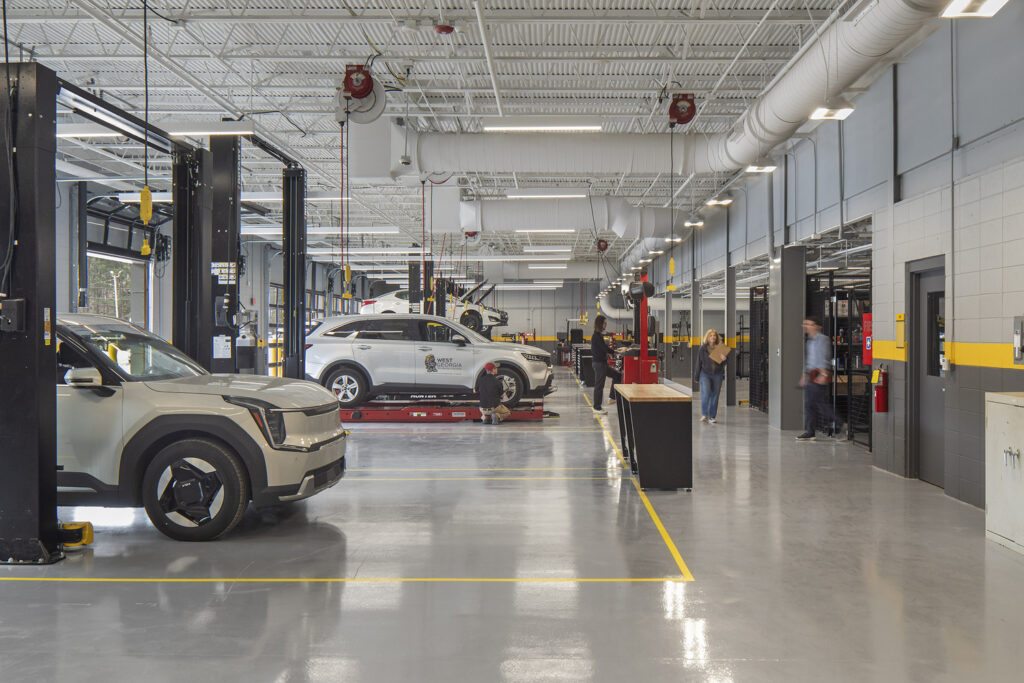
A well-planned lab gives the instructor room to shift between teaching modes without having to reorganize the room each time. That may mean a clear gathering area near a lift, enough space around a vehicle for students to observe safely, or a nearby classroom that allows the class to move between explanation and hands-on work without losing momentum.
The easier it is to move between instruction and practice, the more time the instructor can spend helping students understand the work.
Give Demonstrations a Place to Work
Demonstrations are where many students first connect the explanation to the task.
That connection can break down quickly if the demonstration area isn’t planned well. A student standing behind a lift column may miss the key step. A group crowded too close to the vehicle may create a safety issue. If the diagnostic screen is hard to see, students may watch the instructor’s hands without understanding what the tool is telling them.
When that happens, the instructor has to repeat the same explanation bay by bay. That takes time, but it also changes the quality of the lesson. Instead of one clear demonstration followed by coached practice, the class becomes a series of partial explanations.
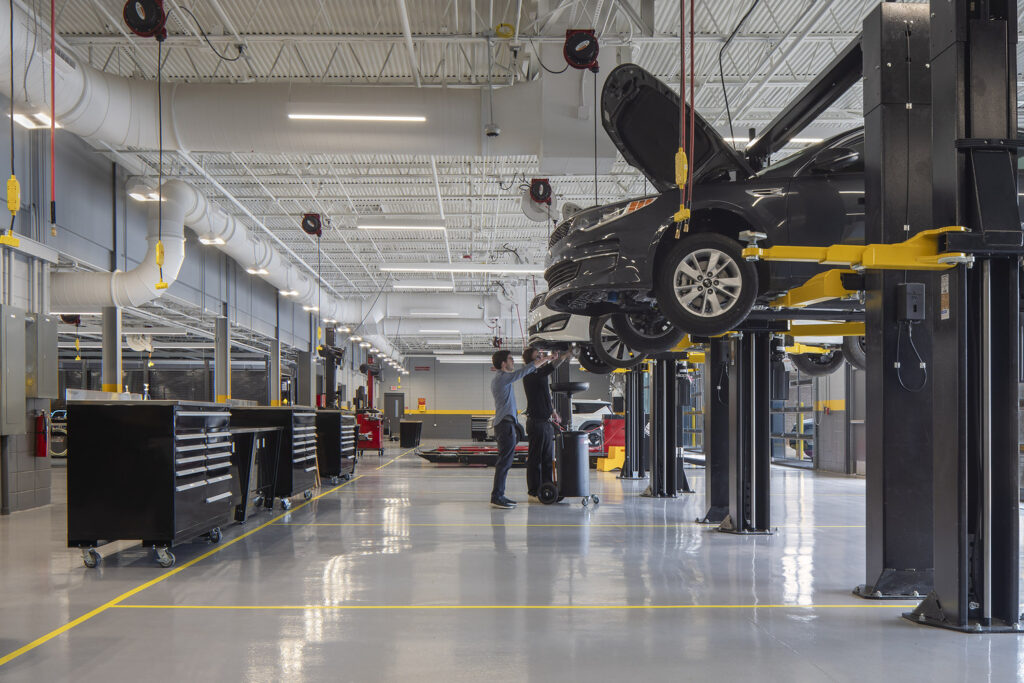
A good demonstration area doesn’t have to be elaborate. It needs enough space for students to gather without blocking active work. It needs good sightlines to the vehicle, the instructor, and any screen or equipment being used. It needs to be close enough to the work that students can move from watching to doing without the lesson losing momentum. That kind of space helps the instructor teach once and reinforce often.
Design So Students Can Hear and Understand
Automotive labs are loud. Engines, tools, compressed air, exhaust systems, and ventilation all add sound to the room. Some noise comes with the work. The problem starts when noise keeps students from understanding instruction.
That matters because students are often learning procedures where order and judgment are important. If they miss part of the explanation, they may copy the movement without understanding the reason behind it. That can affect safety, confidence, and the quality of the work.
Acoustic planning can help. Sound-absorbing ceiling systems, durable wall treatments, and thoughtful placement of loud equipment can make speech easier to understand. Separating the loudest functions from general teaching areas can also reduce distraction.
The goal isn’t silence. The goal is for students to hear the instruction clearly enough to follow the work, ask better questions, and stay engaged.
Better communication also helps the instructor keep the room under control. A clear direction shouldn’t have to be repeated several times because the space makes listening difficult.
Keep the Instructor Connected to the Room
Instructors are constantly scanning the lab.
They’re watching students in different bays, checking how equipment is being used, monitoring movement around vehicles, and looking for unsafe habits before they become routine. That kind of supervision depends on visibility.
Sightlines should be considered early, before the equipment layout is already fixed. Bay orientation, lift placement, column locations, tool rooms, storage areas, and instructor offices all affect how much of the room an instructor can see.
A glazed instructor office or support space can be useful because it gives faculty a place to handle prep, paperwork, or coordination without disconnecting from the lab. That visual connection matters. In a technical lab, teaching often happens through short corrections and quick conversations, not only through formal instruction.
When instructors can see more of the room, they can respond earlier. They can catch a student before a mistake becomes a habit. They can notice when a group is stuck. They can step in before a safety issue grows.
That is better for the instructor, and it’s better for the students.
Lower the Teaching Burden
Faculty already carry the hard part. They’re responsible for student safety, technical accuracy, skill development, industry readiness, and the daily energy of the classroom.
The building shouldn’t make that harder.
A strong automotive lab gives instructors the support they need to teach the way the work is actually learned. It gives demonstrations a place to happen. It makes speech easier to understand. It keeps instructors connected to the room. It helps students move between watching, practicing, and asking questions without confusion.
For a college, those decisions affect more than the layout. They affect how well the program works every day. They shape student confidence, instructor effectiveness, and the long-term usefulness of the facility.
Automotive programs are preparing students for work that keeps changing. The lab should make that work easier to teach.
Related article: Why Automotive Labs Aren’t Commercial Shops
No comments.