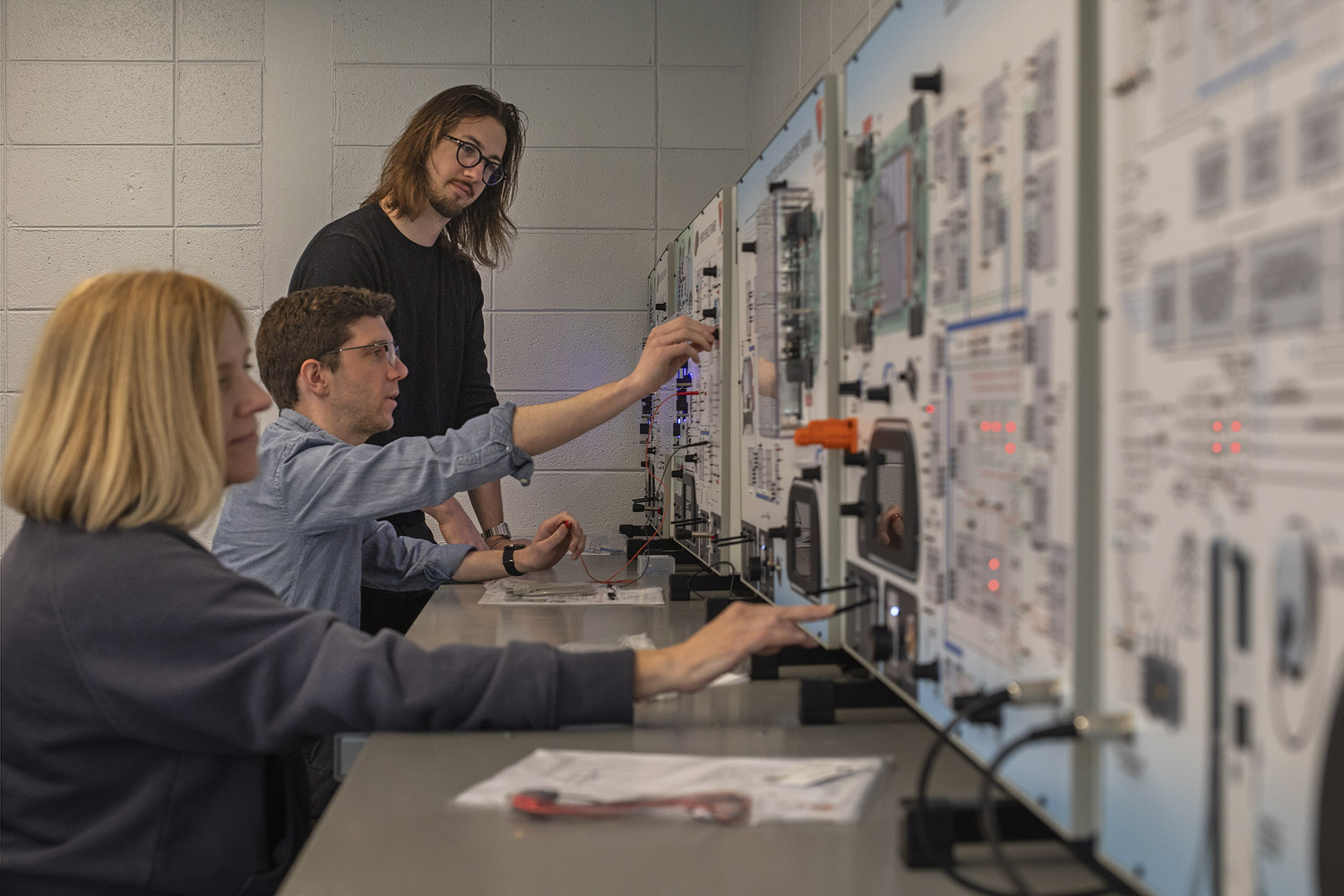
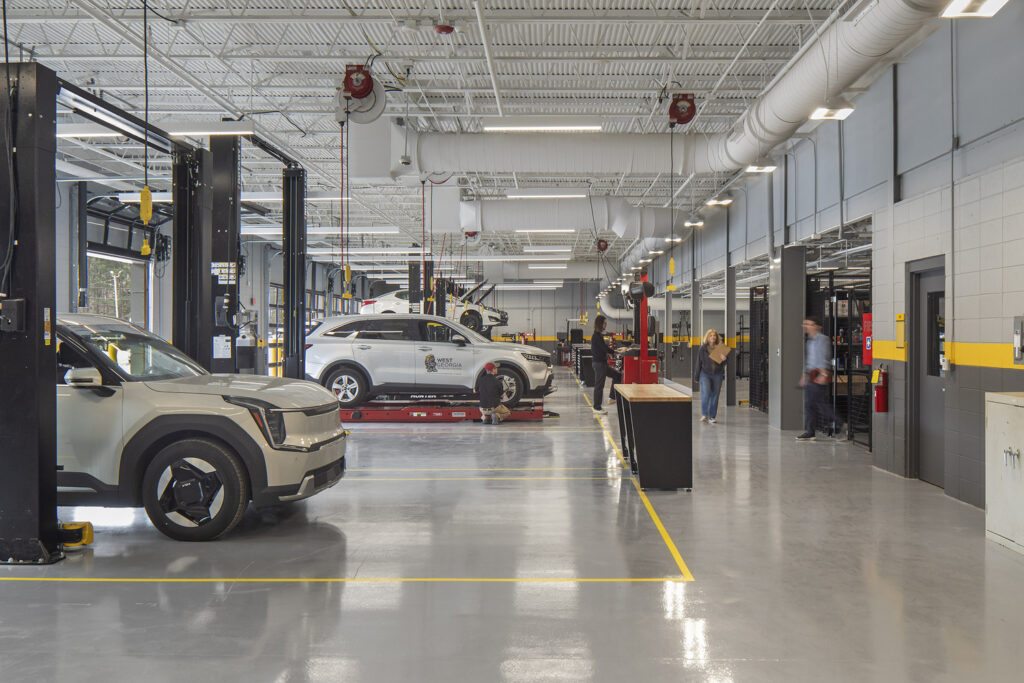
Automotive technology is moving faster than most buildings can, making EV training lab design an increasingly important consideration for colleges planning automotive education facilities.
That’s one of the hardest parts of planning a college automotive lab. The facility needs to support today’s curriculum, but it also has to stay useful as vehicles, tools, diagnostics, and safety requirements continue to change. That doesn’t mean every lab needs to be built around the most advanced technology available on day one. It means the building should make change easier instead of locking the program into one version of the industry.
For colleges, this is a long-term investment issue. The wrong planning decisions can leave a program with spaces that are difficult to update, expensive to modify, or too specialized for the next wave of training needs. The right decisions give instructors and administrators more options as the program evolves.
Plan for EVs Without Overbuilding Around One Moment
Electric vehicles are already changing automotive education. Students need exposure to high-voltage systems, battery management, diagnostics, charging infrastructure, and new safety protocols. Those needs affect space planning, utility planning, clearances, equipment selection, and emergency procedures. The challenge is that EV technology will keep changing.
A lab planned too tightly around one vehicle type, one piece of equipment, or one training model may feel current for a short time and limiting soon after. That is especially risky for colleges, where facilities are expected to serve programs for decades.
A more flexible approach starts with the functions the program needs to support. Can students safely work around high-voltage systems? Is there room for battery removal or specialized diagnostic work? Are there clear zones for training, observation, and controlled access? Can utilities, equipment, and teaching tools be adjusted as the curriculum changes? Those questions help the college prepare for EV training without overcommitting to a layout that may not age well.
Future readiness isn’t about guessing perfectly. It’s about giving the program enough capacity and flexibility to respond when the industry shifts.
Support Specialized Training Without Creating Dead Ends
Some automotive programs need specialized areas for EV training, advanced diagnostics, diesel, collision repair, paint, or frame work. Those spaces can be essential. They can also create problems if they’re planned as isolated, single-purpose rooms with little ability to adapt.
Collision and paint programs are good examples. They may need paint booths, prep areas, frame straightening zones, dust control, fume management, and separation from general automotive labs. Those requirements are real, and they should be respected early in planning. But specialized areas should still connect to the larger teaching environment where it makes sense.
Visual access can help. A window into a paint prep area or a controlled observation point near a specialized process can let students learn from work that cannot safely accommodate a large group. That kind of planning supports instruction without compromising safety.
Specialized spaces should also be tested against future use. What happens if enrollment grows? What happens if the program adds a new certification? What happens if equipment changes size, clearance requirements, or utility needs? What happens if a technology that feels specialized today becomes part of the standard curriculum later? Those questions help the college avoid painting itself into a corner.
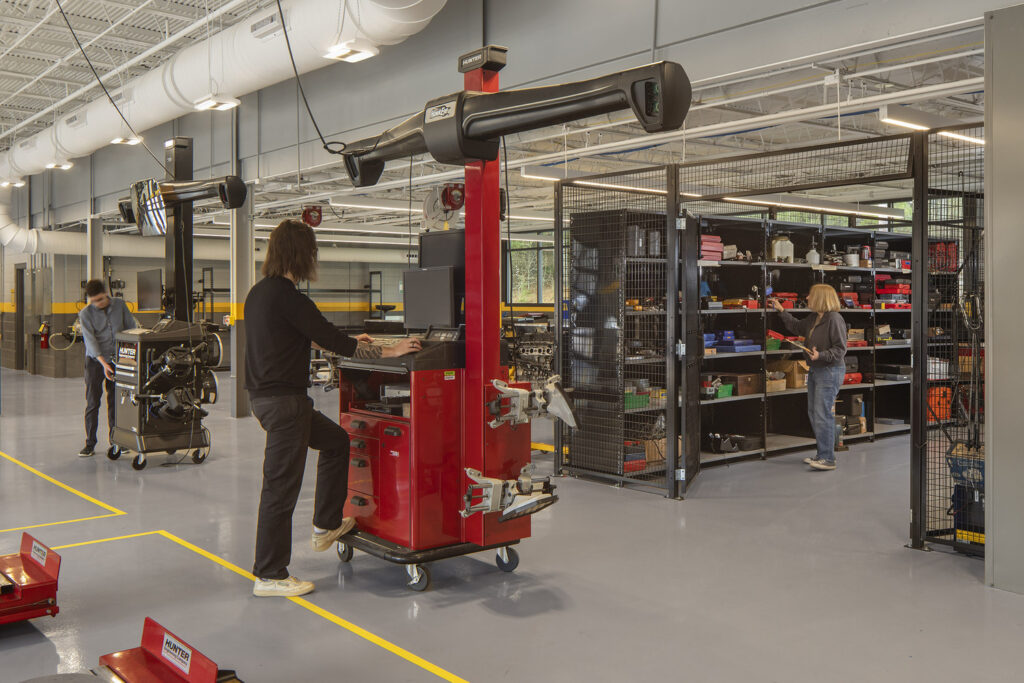
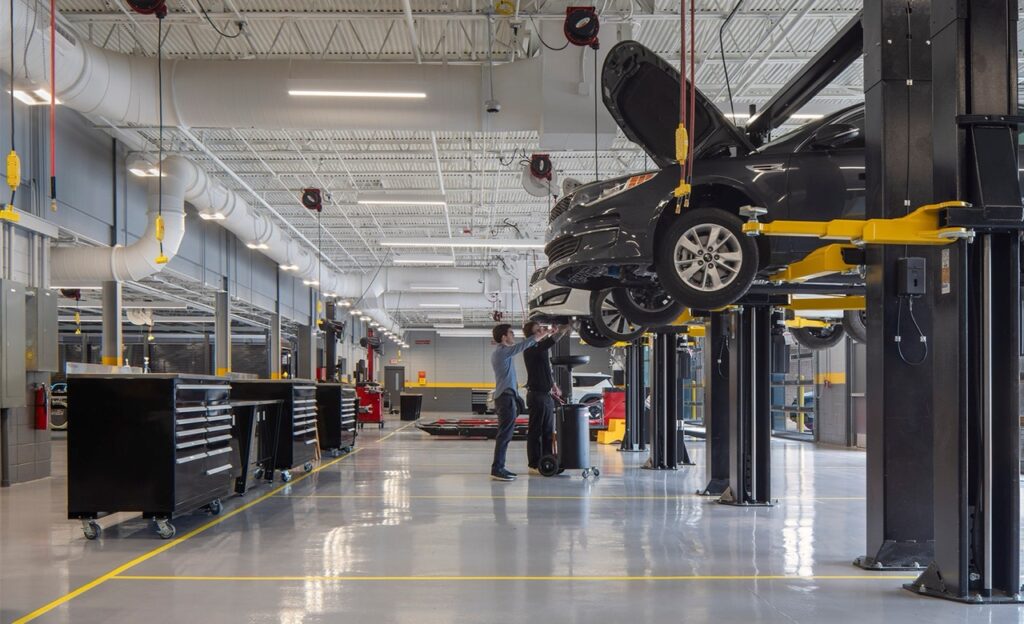
Flexibility can come from several decisions: clear structural spans where possible, utility pathways that can be accessed without major demolition, durable open zones that can accept different equipment, and adjacencies that allow related programs to share resources. Even simple decisions, like avoiding unnecessary fixed partitions or planning storage so it can shift over time, can make the lab easier to adapt later. The goal is to make specialized spaces strong enough for today’s training needs without letting them become dead ends.
Design Building Systems for Daily Use and Future Change
Future-ready labs depend on building systems as much as equipment.
Automotive labs need exhaust extraction, ventilation, lighting, power, compressed air, data, and other utilities that can support technical work safely. In a college setting, those systems also have to support higher student occupancy and longer class periods than a commercial shop. More people are in the room, they stay longer, and they need to hear, see, move, and work safely while instruction is happening.
Ventilation is a good example. It has to manage vehicle exhaust and indoor air quality, but it also has to support the number of students and instructors using the space. Lighting matters too. Students need even, glare-controlled light for detailed work, demonstrations, inspections, and diagnostics.
Utility planning is another long-term issue. If power, data, compressed air, charging infrastructure, or exhaust systems are difficult to access or modify, future upgrades become more expensive. A lab may need new equipment before the building itself needs a major renovation. The systems should make that kind of change manageable.
These decisions aren’t glamorous, but they shape how the building performs year after year. They affect comfort, safety, maintenance, and the program’s ability to keep pace with industry change.
Design for Maintenance, Updates, and Daily Wear
Future-ready labs also have to hold up to daily use.
Educational labs take a beating. Students are learning how to use equipment, maneuver vehicles, handle tools, and work around building systems. Surfaces, doors, storage, flooring, utility connections, and equipment supports need to be selected with that reality in mind.
Durability matters because it affects the life of the facility. Maintainability matters just as much. If staff can’t access systems easily, small repairs become bigger disruptions. If utilities are buried in ways that make change difficult, future upgrades become more expensive. If storage is undersized or poorly located, equipment ends up in the wrong places and the lab becomes harder to manage.
Colleges should be able to update training equipment, adjust utilities, and maintain core systems without turning every change into a major renovation. That kind of flexibility protects the institution’s investment and keeps the program from losing momentum when curriculum needs shift.
Build for the Program After Opening Day
A new automotive lab is usually planned around a current program, current equipment list, and current set of funding priorities. That makes sense. Colleges need to make real decisions with real budgets. But opening day is only the beginning.
After the building opens, instructors will refine how they teach. Students will use spaces in ways the planning team may not have fully predicted. Technology will keep moving. Industry partners may ask for different skills. New certifications may bring new equipment. Enrollment may grow in one area and soften in another. A future-ready lab gives the college room to respond.
That starts with asking practical questions during planning. Which parts of the lab need to be fixed and which can remain flexible? Where should extra capacity be built in? Which utilities are likely to change? Which specialized spaces need the most protection, ventilation, clearance, or control? Which decisions would be expensive to undo later?
The answers will vary by program. A rural technical college, a university research partnership, and a high-volume workforce training center may all need different solutions. But the mindset is the same: design the lab for the way the program will keep changing after the ribbon cutting.
Automotive programs are preparing students for an industry that will not stand still. The building should give those programs enough structure to operate safely today and enough flexibility to adapt tomorrow.
No comments.